How AI Infrastructure Is Evolving to Meet Growing Compute Demand
AI infrastructure undergoes a historic shift as custom hardware, liquid cooling, and optical networks scale to handle massive AI compute demands.
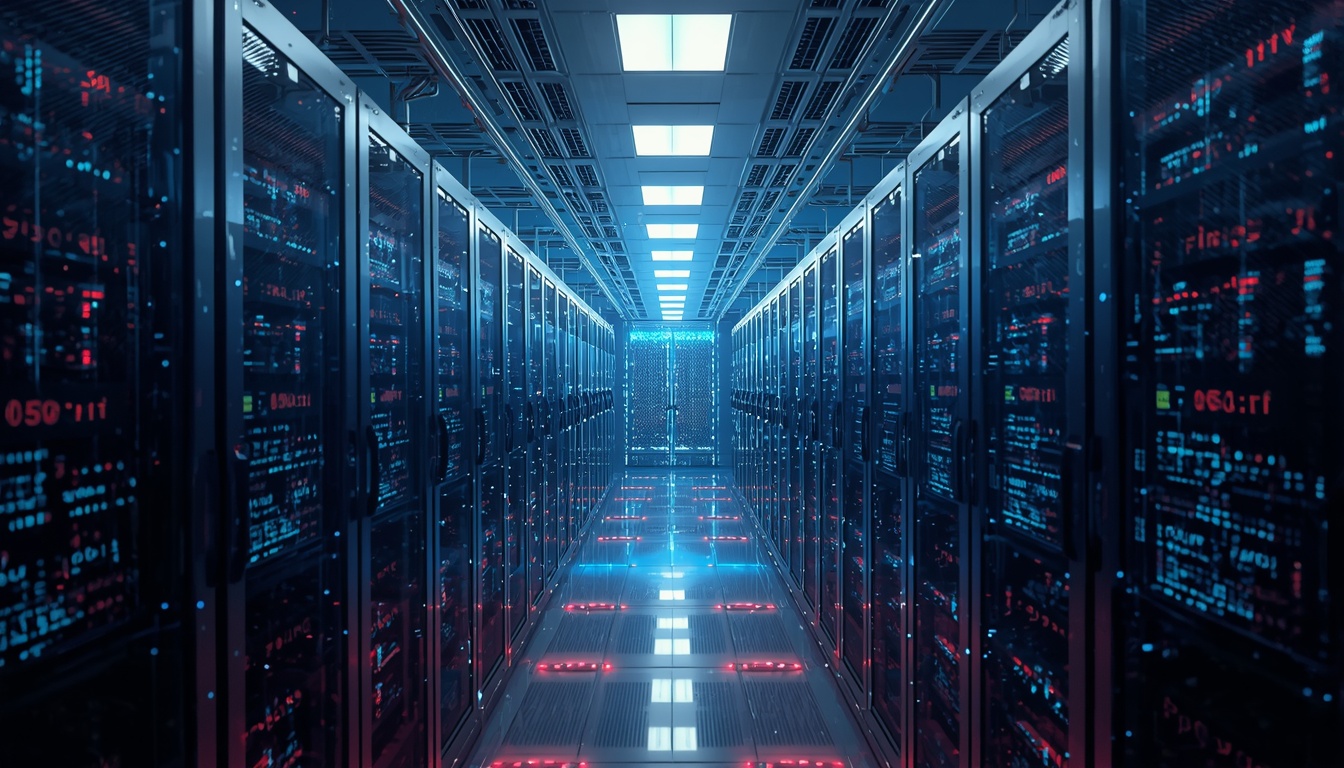
As frontier artificial intelligence models push into multi-trillion parameter scales, the global infrastructure backing these systems is undergoing a profound structural evolution. What began as simple GPU clusters housed in conventional enterprise data centers has transformed into gigawatt-scale computing environments engineered from the ground up specifically for artificial intelligence workloads. The relentless expansion of both pre-training runs and real-time reasoning-heavy inference has forced technology companies, chipmakers, and data center operators to completely rethink hardware architecture, power distribution, thermal management, and networking topologies.
Silicon Specialization and the Custom Accelerator Boom
Hardware specialization has become the primary battleground in the effort to keep pace with training and inference requirements. While graphics processing units (GPUs) remain the bedrock of general-purpose AI computing, hyperscale cloud providers are increasingly turning to bespoke application-specific integrated circuits (ASICs) to lower total cost of ownership and bypass silicon supply bottlenecks. Systems like Google’s latest Tensor Processing Units (TPUs), Amazon Web Services’ Trainium and Inferentia lines, Meta’s MTIA, and Microsoft’s Maia accelerators reflect a systematic transition toward domain-specific hardware designed around sparse matrix operations and high-speed tensor engines.
Crucially, the evolution of accelerator architecture is no longer just about raw floating-point operations per second (FLOPS). High-bandwidth memory (HBM) integration has emerged as the true gating factor for performance. As memory bandwidth bottlenecks threaten to leave ultra-fast computational cores idling—a phenomenon known in the industry as the "memory wall"—the deployment of HBM3e and next-generation HBM4 memory stacks has become mandatory. These advanced memory architectures place stacked DRAM chips directly on top of or alongside the primary logic die using advanced 2.5D and 3D packaging technologies, allowing terabytes of data per second to flow into processing cores.
Furthermore, chipmakers are shifting away from monolithic silicon designs toward chiplet-based architectures. By breaking large processors down into smaller, modular dies connected via high-density interposers, manufacturers can maintain high yield rates while scaling physical surface area. This modular approach allows engineers to mix and match logic nodes, memory controllers, and interconnect interfaces on a single package, drastically accelerating iteration cycles and tailoring chips to specific AI tasks such as long-context window retrieval or dense mixture-of-experts (MoE) routing.
Thermal Dynamics and the Imperative Transition to Liquid Cooling
The sheer power density of modern hardware has pushed traditional air-cooling techniques beyond their physical and thermodynamic limits. Standard enterprise server racks historically operated at power densities between 5 and 15 kilowatts (kW) per rack. In stark contrast, modern AI server architectures featuring densely packed accelerator trays routinely exceed 100 kW per rack, with future designs targeting 200 kW or more per enclosure. Air-based computer room air conditioning (CRAC) units simply cannot circulate enough physical volume of air through tight chassis spaces to dissipate the extreme localized heat generated by these high-wattage components.
Consequently, direct-to-chip (D2C) liquid cooling and full immersion cooling systems have transitioned from niche experimental deployments into standard requirements for new AI data center construction. Direct-to-chip liquid cooling circulates closed-loop dielectric fluids or treated water through cold plates mounted directly atop processors and high-bandwidth memory dies. This setup absorbs thermal energy at the source far more efficiently than air, transferring heat out of the server chassis via secondary liquid-to-liquid heat exchangers and Coolant Distribution Units (CDUs).
Beyond direct-to-chip setups, two-phase immersion cooling—where entire server blades are submerged in specialized non-conductive fluid that boils and condenses within a sealed vat—is gaining traction for maximum density configurations. These advances not only stabilize thermal performance to prevent thermal throttling during multi-month training runs, but they also dramatically reduce the overall Power Usage Effectiveness (PUE) ratio of data centers by eliminating the massive energy overhead previously consumed by high-speed fans and industrial air chillers.
Networking Topologies and High-Speed Fabric Innovations
As AI training clusters scale to tens of thousands—and in some cases hundreds of thousands—of interconnected chips, the network fabric binding these compute nodes together becomes just as critical as the processors themselves. Distributed training relies on continuous synchronization of gradients and weights across vast clusters, meaning that any network latency or packet loss can cause high-value compute resources to sit idle waiting for data updates.
Modern cluster designs are moving toward flat, non-blocking network topologies using custom interconnect fabrics such as NVIDIA's NVLink networks, alongside high-speed Ethernet and InfiniBand deployments operating at 800Gbps and 1.6Tbps speeds. The emerging Ultra Ethernet Consortium (UEC) standards are re-engineering traditional Ethernet protocols to support lossy-free transmission, dynamic multipath routing, and hardware-based packet reordering tailored specifically to collective communication patterns in distributed AI workloads.
- High-density optical interconnects and silicon photonics that convert electrical signals to optical signals directly on the package, drastically reducing transmission energy.
- Optical Circuit Switching (OCS) dynamically reconfiguring topology links based on training traffic patterns without requiring costly electrical-to-optical conversions at every hop.
- In-network computing capabilities where network switches directly perform collective operations like AllReduce, offloading tensor aggregation tasks from primary server nodes.
- Advanced congestion control algorithms designed to mitigate "incast" network bottlenecks during synchronized, cluster-wide gradient exchanges.
The rapid deployment of co-packaged optics (CPO) represents the next frontier in network hardware. By placing optical transceivers directly onto the substrate alongside the GPU or ASIC switch silicon, system designers eliminate long copper traces on circuit boards. This structural shift reduces interconnect power consumption by up to 30 percent while doubling throughput density across multi-rack scale systems.
Energy Grid Integration and Infrastructure Power Constraints
The skyrocketing compute demand has elevated energy availability to the single largest limiting factor for AI expansion worldwide. Hyperscalers and data center developers face multi-year queue delays when attempting to connect gigawatt-scale facilities to regional power grids that are already struggling under aging infrastructure and decarbonization mandates. The spatial concentration of computational demand means data centers must innovate not just in how they consume energy, but in how they source, store, and manage electrical power on site.
To secure clean, baseload power, major technology firms are directly contracting with nuclear energy producers, investing in Small Modular Reactors (SMRs), and funding advanced geothermal infrastructure. Combining dedicated off-grid power generation with utility-scale battery energy storage systems (BESS) creates microgrid environments that allow facilities to operate continuously regardless of local utility constraints.
"The fundamental bottleneck for artificial intelligence has shifted decisively from silicon availability to electrons. Building next-generation frontier intelligence requires not just faster chips, but entirely new energy topologies capable of delivering steady gigawatt-scale power without overwhelming localized electrical grids."
Furthermore, software operators are implementing grid-aware training schedules. By utilizing dynamic workload orchestration, non-time-sensitive inference batches and non-critical checkpointing operations can be dynamically shifted across geographically distributed data centers based on localized renewable power availability and real-time electricity pricing. This temporal and spatial elasticity transforms compute clusters from passive energy sinks into active, flexible grid participants.
Software Orchestration, Memory Virtualization, and Cloud Aggregation
Underpinning the physical infrastructure changes is a sophisticated layer of software orchestration systems designed to squeeze maximum efficiency from heterogeneous hardware fleets. Frameworks like Kubernetes, Ray, and Slurm have been extended with deep hardware-awareness, dynamically scheduling tensor operations across mixed clusters containing diverse silicon generations and interconnect configurations.
A major evolutionary breakthrough in memory management comes via Compute Express Link (CXL) standards. CXL allows pooled, disaggregated memory pools to be accessed over PCIe buses, allowing processors across different server chassis to share dynamic RAM seamlessly. This virtualization of memory prevents memory-bound workloads from running out of local capacity, allowing inference engines to host massive context buffers without requiring additional high-cost GPU nodes.
Distributed runtime systems are also maturing rapidly to automate model parallelism techniques—including tensor, pipeline, sequence, and expert parallelism. By dynamically partitioning neural network architectures across optimal topology routes, modern orchestration software masks hardware failures and optimizes network utilization without requiring deep manual intervention from AI research engineers.
Sustainable Growth and the Long-Term Path for AI Compute
As artificial intelligence shifts from initial experimentation into pervasive industrial utility, the underlying infrastructure must balance hyper-scaling demands with long-term economic and environmental sustainability. The current era of unprecedented capital expenditure in physical compute infrastructure is laying the foundation for a deeply transformed global IT ecosystem where specialized processing, liquid cooling, and clean energy generation are tightly integrated standards rather than high-end exceptions.
Looking forward, the convergence of optical computing, advanced material science, and algorithmic efficiency promises to bend the energy curve for AI. Systems will become increasingly heterogeneous, offloading routine tasks to ultra-low-power edge accelerators while reserving multi-gigawatt central clusters for heavy reasoning and foundational model pre-training.
Ultimately, the evolution of AI infrastructure is a testament to the interdisciplinary engineering required to sustain technological progress. Technology providers that master the full stack—from raw silicon packaging and liquid cooling to green power sourcing and distributed software routing—will define the future trajectory of artificial intelligence, turning pure computational power into a ubiquitous resource for global industry.